
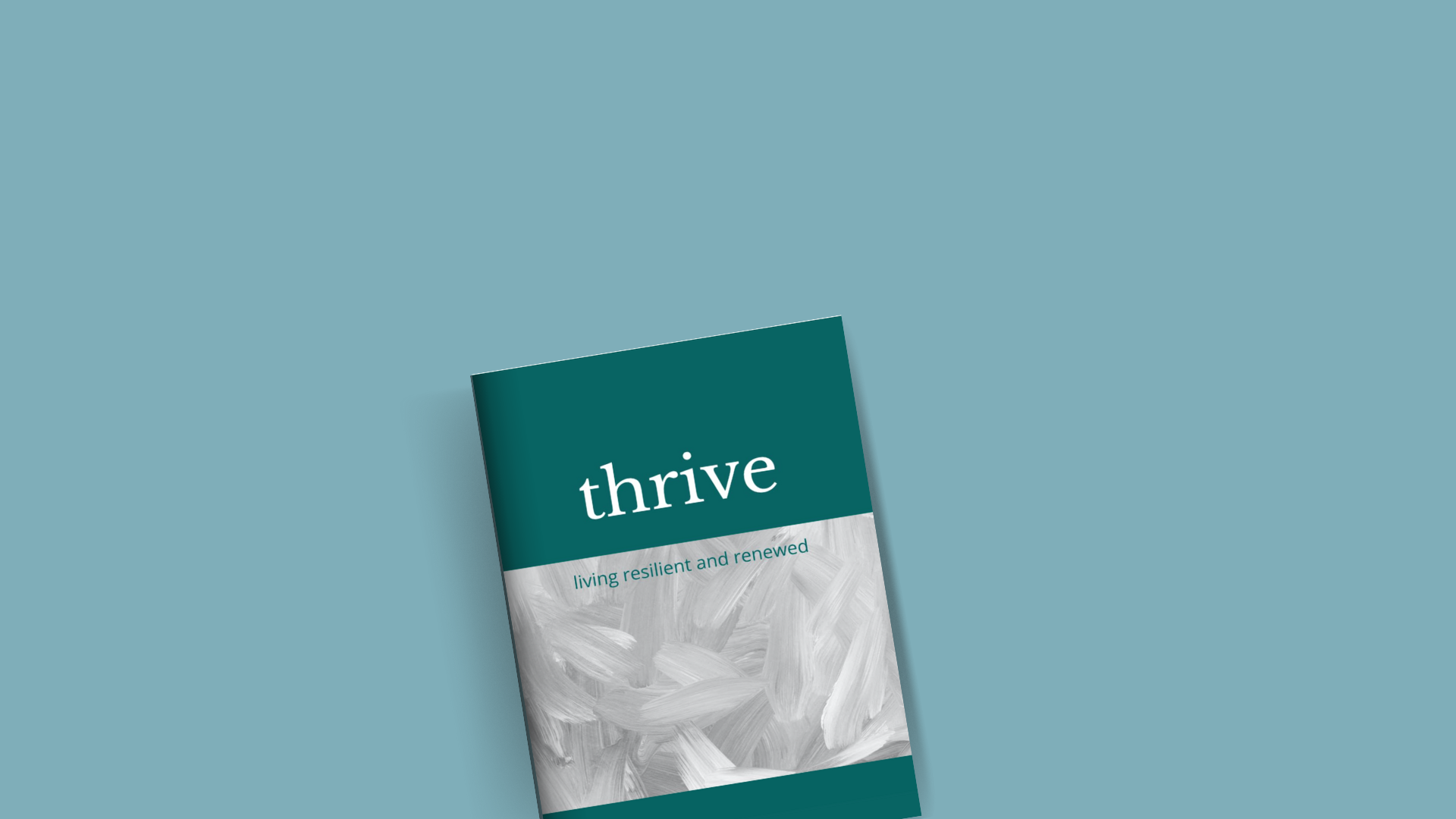
Thrive: A Whole-Health Mental Health Recovery Program.
A 20-week course workbook for mental health recovery, resilience, and flourishing.
Is the Thrive mental health program evidence-based?
Yes, the Thrive program is an evidence-based mental health recovery course. Clinical research on the Grace Alliance Thrive curriculum and program has shown a case study that demonstrates a transformation from hospitalization to a thriving life, experiencing the following:
Significant symptom reduction of depression, anxiety, and stress
Improved mood, enhanced memory, and increased resiliency
Stronger sense of spiritual well-being and social connection
Thrive is a more in-depth experience (course) expanding on all the principles found in the Free Grace Group workbooks.

How is the Thrive recovery curriculum structured?
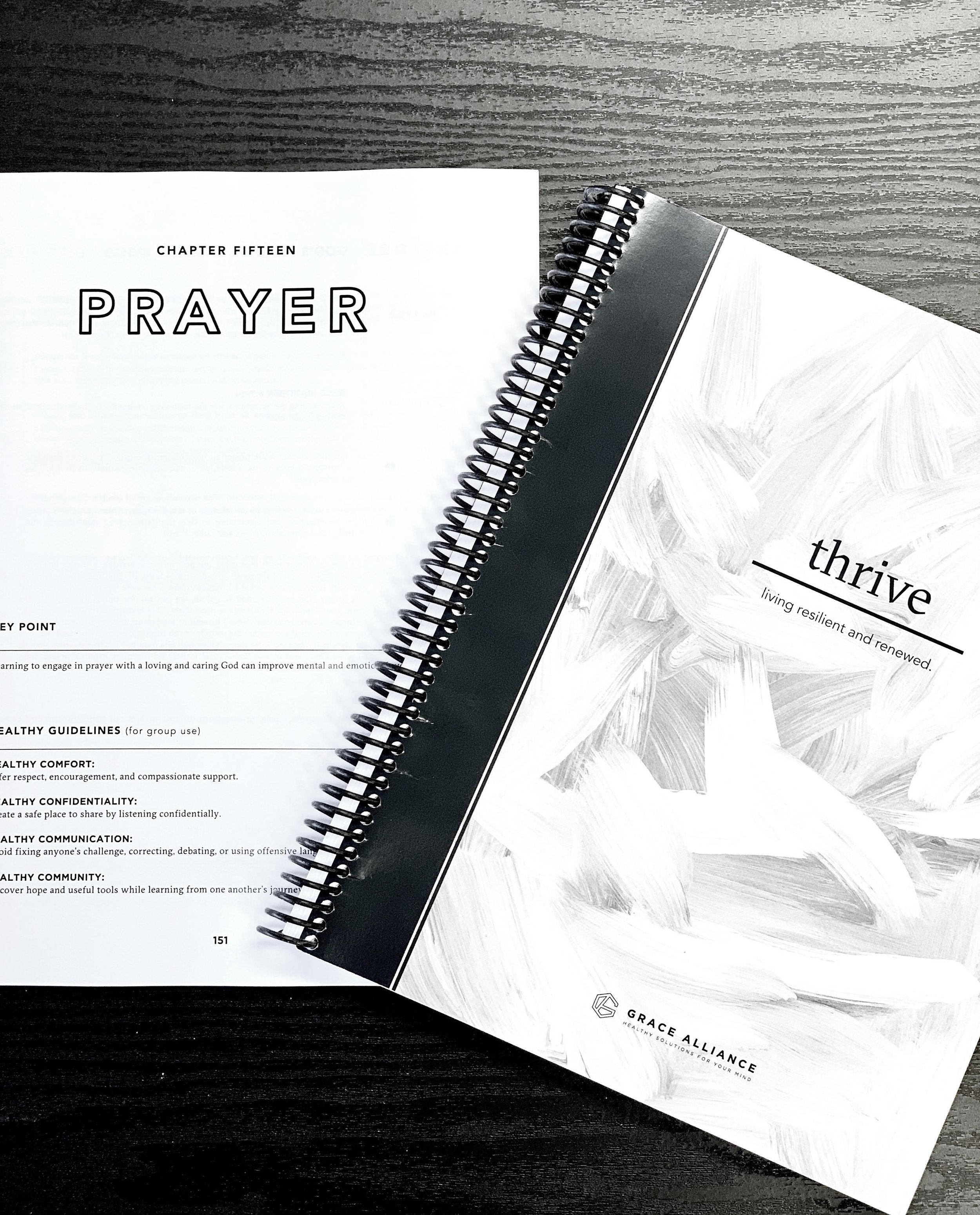
The Thrive program uses a whole-person (holistic) approach that integrates evidence-based clinical science with Biblical grace to help individuals build resilience and navigate challenges like anxiety, depression, burnout, and trauma. The workbook is divided into four primary sections, each containing five chapters focused on a specific pillar of health:
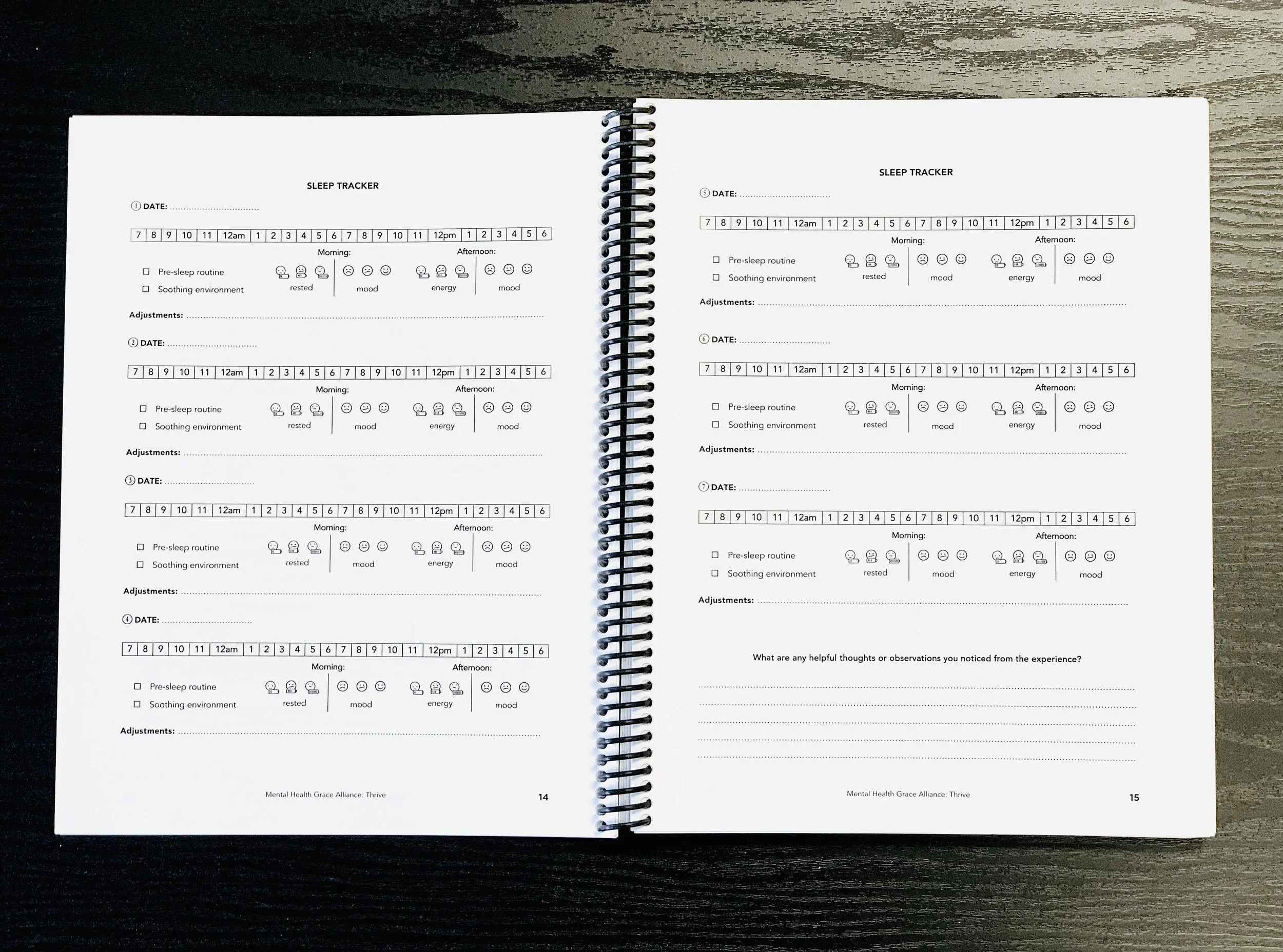
Physical: Sleep, nutrition, and stress management.
Mental: Renewing thoughts and recognizing triggers.
Spiritual: Restoring identity and discovering hope in God.
Relational: Building life-giving community and healthy boundaries.
Each chapter includes Scripture reflections, scientific insights, and practical resiliency tools to track personal growth goals.


Who should use the Thrive workbook?
The Thrive workbook is designed for individuals (personal use), small groups, and church ministries. It is ideal for anyone seeking a "mental health coach" experience to manage:
Unmanageable stress and burnout.
Racing or negative thoughts.
Mood instability and addictive habits.
Feelings of hopelessness or spiritual disconnection.
Thrive is proven effective as a coaching program (combined with professional mental health care)
“Psychologists and Clergy Working Together: A Collaborative Treatment Approach for Religious Clients” (Journal of Spirituality in Mental Health, 2014):
Thrive in collaboration with professional treatment — The study concluded that the participant, who went from hospitalization to restoring life, saw significant improvements in:
Reduced depression, anxiety, and avoidance (fear) of activities.
Improved mood and affect (joy resurfaced)
Improved cognition and memory
Improved relationships and participating in social-spiritual activities (church, small group, etc.)
Two-month post-surveys indicated ongoing improvement
CONCLUSION: This kind of collaboration is not just feasible but advantageous. It reduces barriers to both spiritual and therapeutic care. For religious clients, integrating therapy with spiritual support via clergy can enhance treatment, improve engagement, and leverage the faith resources the person already has. The study argues that secular psychology should no longer ignore religion/spirituality in treatment when it is salient for the client, but rather embrace collaboration in a careful, principled way.
Order your copy today.
“★★★★★
“The quality, content, and layout of this new Thrive book are outstanding. Our Church leadership are impressed.”
“I’m finding the Thrive workbook useful. After years of searching for faith-based resources, I found your website and bought your book. Your book is empowering, helpful, and freeing.”
“The things I have learned in Thrive, I will use for the rest of my life. It has and will forever impact me and the people around me.”
All Mental Health Grace Alliance resources compliment and promote professional therapy and treatment, not intended to replace or discontinue. (see full disclaimer).